
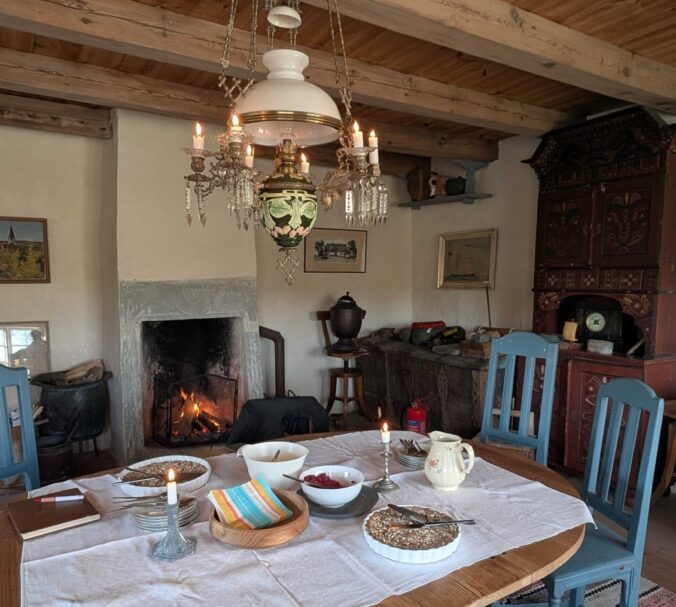
By October the days start getting shorter and shorter. I knew it would happen, but it somehow still took me by surprise. I was never sure which sunny day would turn out to be the last one, so I spent all of them outside. Until one day I was wearing my shorts and biking to uni and midway it started to get chilly; not enough to bring out my mammakorv (wait for the blog about that) but enough to bring out that wool sweater that was still lying in the suitcase. And fall had just started.
Sweden’s weather is mostly unpredictable and asks you to be ready for wind, rain, sun, and even snow (especially if it’s April). Maybe that unpredictability may be why Sweden makes such good outdoor gear, but it is also why Swedish homes are the way they are. The weather forces you to be inside at least 4 months and maybe that is the reason why Swedes have become the experts at the art of home décor and setting the right atmosphere.
For instance, I have never seen so many candles in my life since I arrived in Sweden (and I am not talking about Lucia festivity). But more about how candles are present in daily life, according to Sverige Radio, more than 300 million tealights are used per year in Sweden. And it makes total sense, lighting a candle means having a little light in your home, particularly important if the sunset is at 3pm. Later in the year, you also have the adventsstjärna, a star that is placed in almost all windows and that illuminates the streets. Suddenly everyone has a blanket to put on your lap, a candle lit besides you and a coffee or tea in your hands.
Coziness is part of the experience of Sweden, when you go to a café that is nice to sit at or that has good décor that makes you feel at home, a Swede will describe it as cozy. If there is a relaxed hike, with snow and a hot chocolate pit stop people might describe it as a mysig vandring, and even if a person is easygoing and just nice to be around, they could also be described as cozy.
When I first started listening to what at the beginning might seem like an overuse of the term cozy, I thought it was interesting and maybe it was because we were all speaking our second language. But soon I realized it is not necessarily an overuse of the word, but more a sort of lost in translation nuance that mysigt covers while cozy stays short. Cozy is an adjective, is something you have, while in Swedish it can also be a verb mysa, something that is. For example you can have a höstmys, feeling of enjoying autumn.
For me that tells us a lot about the core values of Swedish culture. The value of going slow, the importance of beauty in a physical space and of being comfortable and relaxed. When you stay four months indoors, you start valuing that nice couch with a warm blanket more than you would expect.
Leave a Reply